Cave Temple
Architecture
20,000+ sq ft of interconnected man-made caves — where ancient sculptural traditions meet modern devotion
Quick answer
Kailasagiri is an entirely man-made cave temple — over 20,000 sq ft of interconnected caves excavated and hand-carved from the hillside rock, not a natural cave adapted for worship. Every pillar, shrine and relief was sculpted in the authentic Chola-Pallava tradition by Late Sri S.M. Ganapathi Stapathi, following the proportions of the Shilpa Shastras. It is the largest man-made cave temple built in the last 1,000 years.
Last updated: June 2026
Architectural Marvel
The Cave Complex
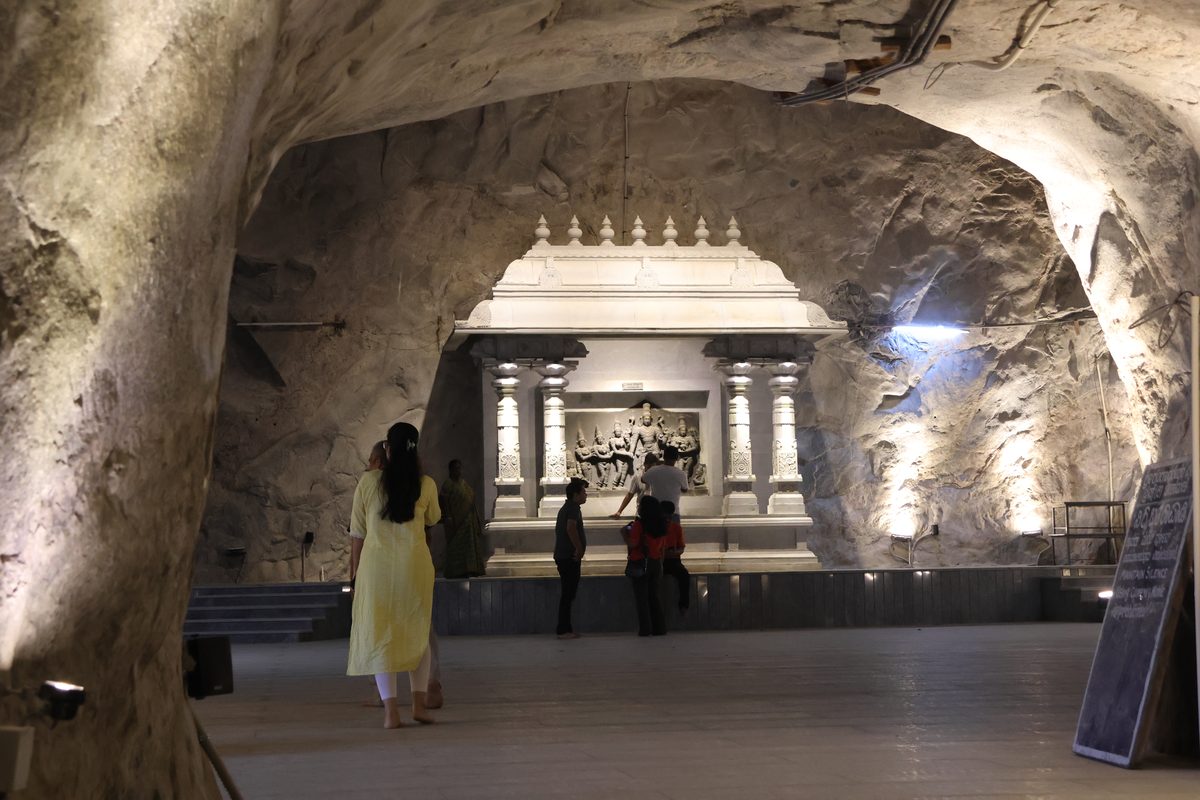
Shri Kailasagiri Guhantara Devalaya is not a single cave but a vast interconnected system of man-made caves spanning over 20,000 square feet. Carved and constructed over three decades, this complex represents the most ambitious cave temple project undertaken anywhere in the world in the last millennium.
Unlike natural caves that are simply adapted for worship, every chamber, corridor, and shrine at Kailasagiri was deliberately designed and hand-crafted — shaped to create specific acoustic, visual, and spiritual effects that enhance the devotional experience.
The complex weaves together multiple functional spaces — grand gathering halls, intimate shrine caves, ritual chambers, and meditative alcoves — all connected by winding passages that guide the devotee on a journey from the outer world into the sacred heart of the temple.
Sacred Spaces
Architectural Highlights
Each space within the complex serves a distinct spiritual and communal purpose, designed to facilitate worship, ritual, and contemplation.
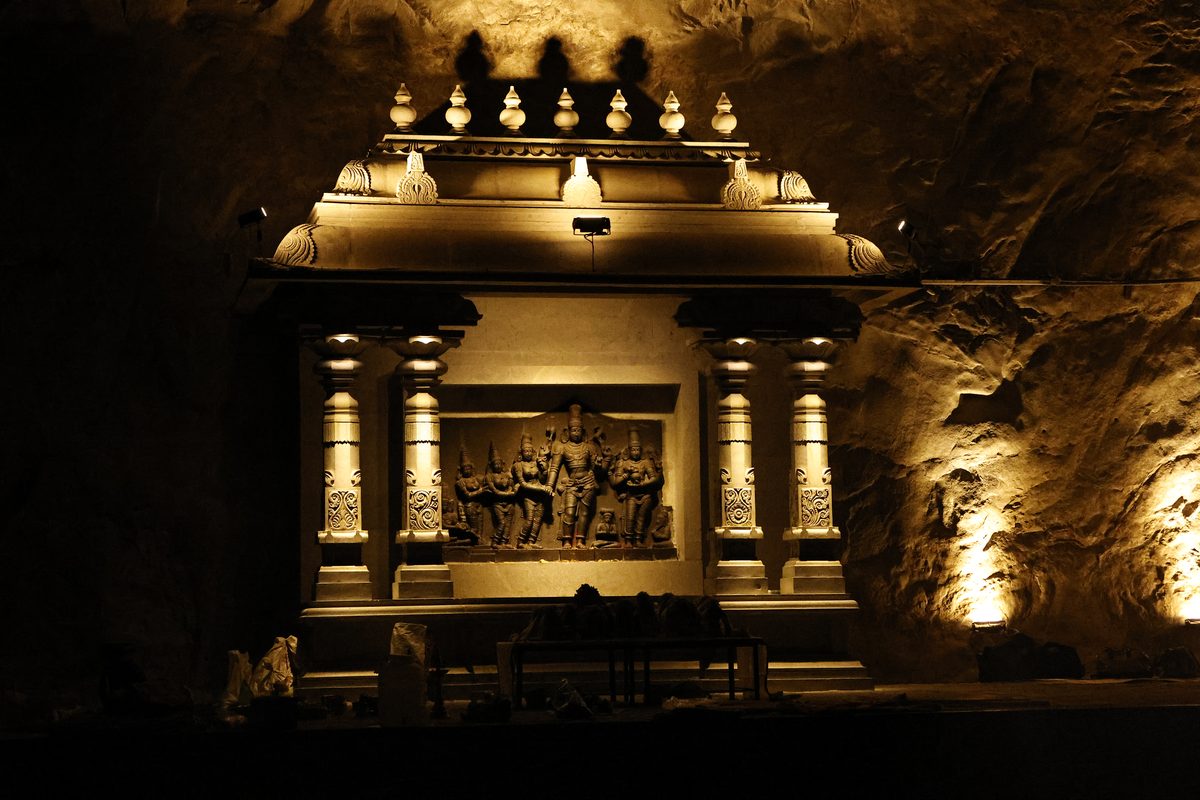
Grand Gathering Space
The Main Hall
The centrepiece of the complex is the grand main hall, an expansive cave chamber that can seat 400 devotees for religious gatherings, festivals, spiritual discourses, and community events.
The hall features intricately carved pillars supporting a vaulted ceiling, with relief panels depicting scenes from Hindu mythology. The natural acoustics of the cave amplify devotional music and chanting, creating an immersive spiritual atmosphere.
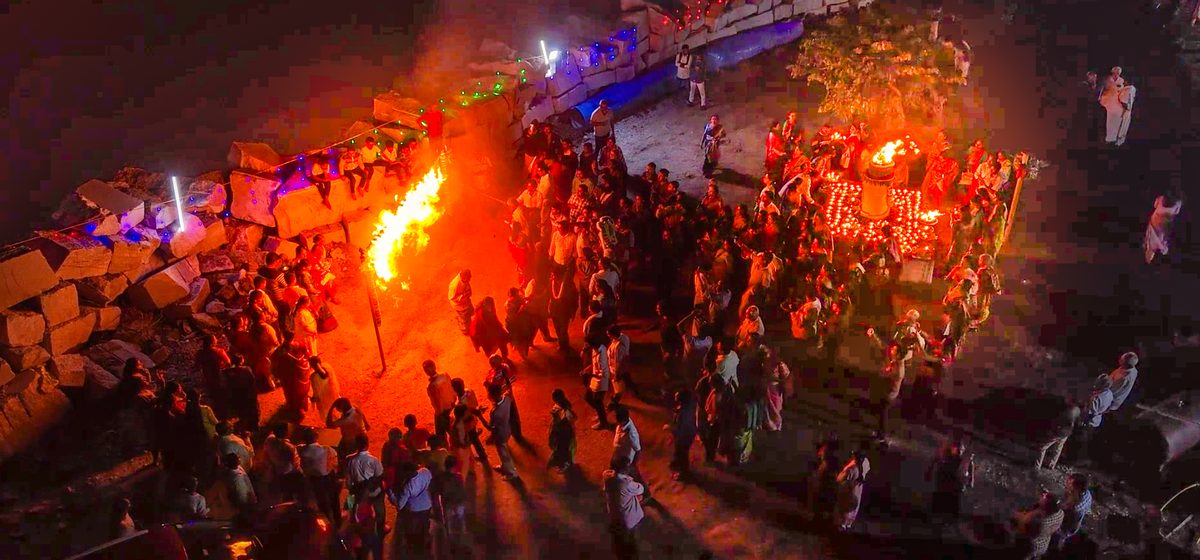
During major festivals like Maha Shivaratri, this hall comes alive with thousands of oil lamps, transforming the stone chamber into a luminous sanctum that transports devotees to another realm entirely.
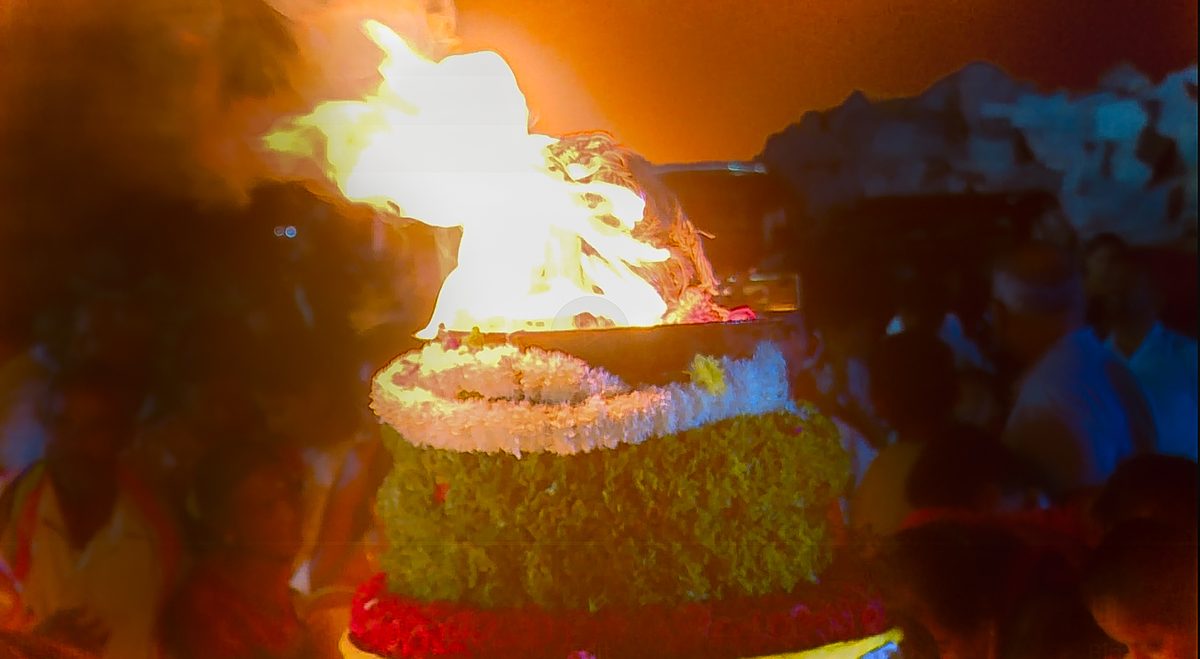
Sacred Fire Rituals
Yaga Shalla
The Yaga Shalla is a dedicated fire ritual hall, purpose-built to host the elaborate Vedic fire ceremonies (homams and yagas) that form an integral part of Hindu worship tradition.
The chamber was designed with careful attention to ventilation — ensuring that the sacred fire can burn safely within the enclosed cave environment while allowing smoke to dissipate naturally. The acoustics amplify the chanting of mantras, intensifying the spiritual potency of each ritual.
Regular fire rituals including Rudra Homam, Ganapathi Homam, and Navagraha Homam are conducted here, drawing devotees who seek the purifying power of Agni — the sacred fire that serves as the divine messenger between humans and the gods.
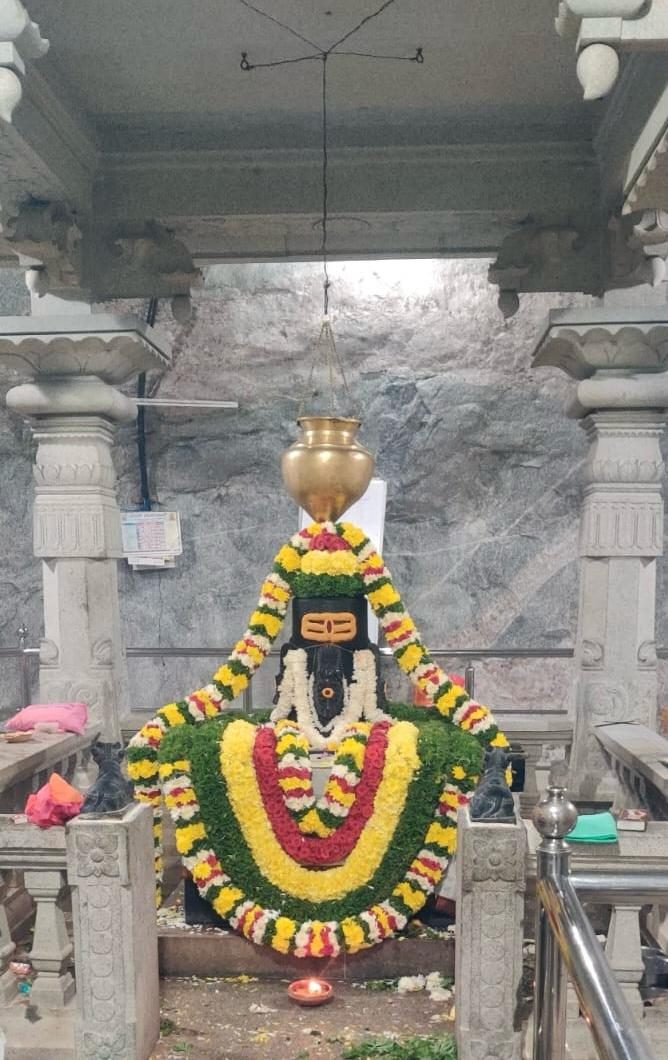
The Innermost Sanctums
Three Shrine Caves
At the spiritual heart of the complex lie three primary shrine caves, each housing a principal deity in its own dedicated sanctum (garbha griha):
- ◆ Chaturmukha Lingeshwara Swamy — The four-faced Shiva Linga, the presiding deity, housed in the largest and most ornate shrine cave with intricate carvings on every surface.
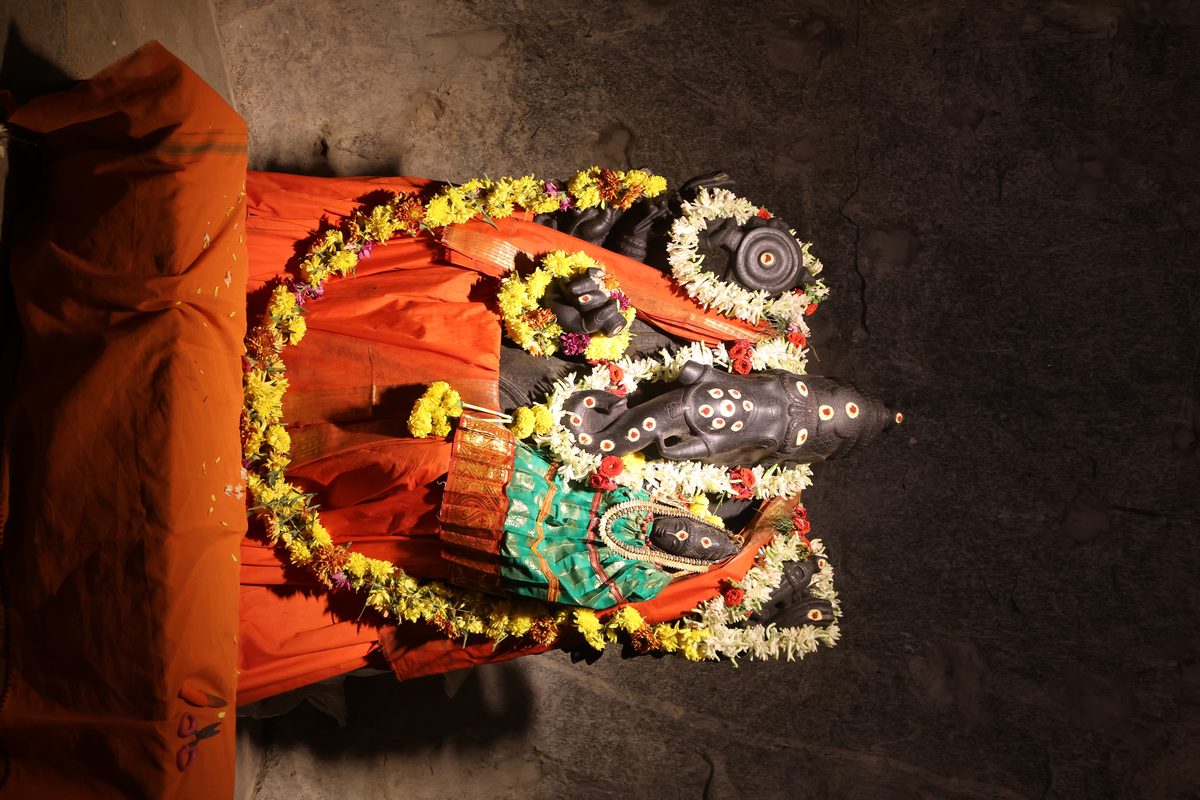
- ◆ Vallabha Ganapathi — The first deity consecrated, in a shrine cave adorned with carvings depicting the many forms of Lord Ganesha.
- ◆ Goddess Jagadambe — The Mother of the Universe, enshrined in a cave decorated with images of the Devi in her many divine aspects.
Each shrine cave follows the traditional temple layout — an outer mandapa (pillared hall), an antarala (vestibule), and the innermost garbha griha (sanctum sanctorum) where the deity resides. The dimly lit interiors, cool cave temperatures, and fragrance of incense create a profoundly sacred atmosphere.
Inner Contemplation
Meditation Hall
Separate from the main worship areas, the meditation hall is a serene, dimly lit chamber designed specifically for silent contemplation and inner reflection.
The natural acoustics of this cave chamber absorb external sound, creating a cocoon of profound stillness. The cool, constant temperature within the stone walls offers relief from the outside heat and enhances the meditative state.
For centuries, sages and saints have sought out caves as ideal environments for meditation — the absolute darkness and silence found deep within the earth naturally draws the mind inward. The meditation hall at Kailasagiri carries forward this ancient tradition, offering every visitor the opportunity to experience the transformative power of cave meditation.
Ongoing Expansion
Kshetra Expansion
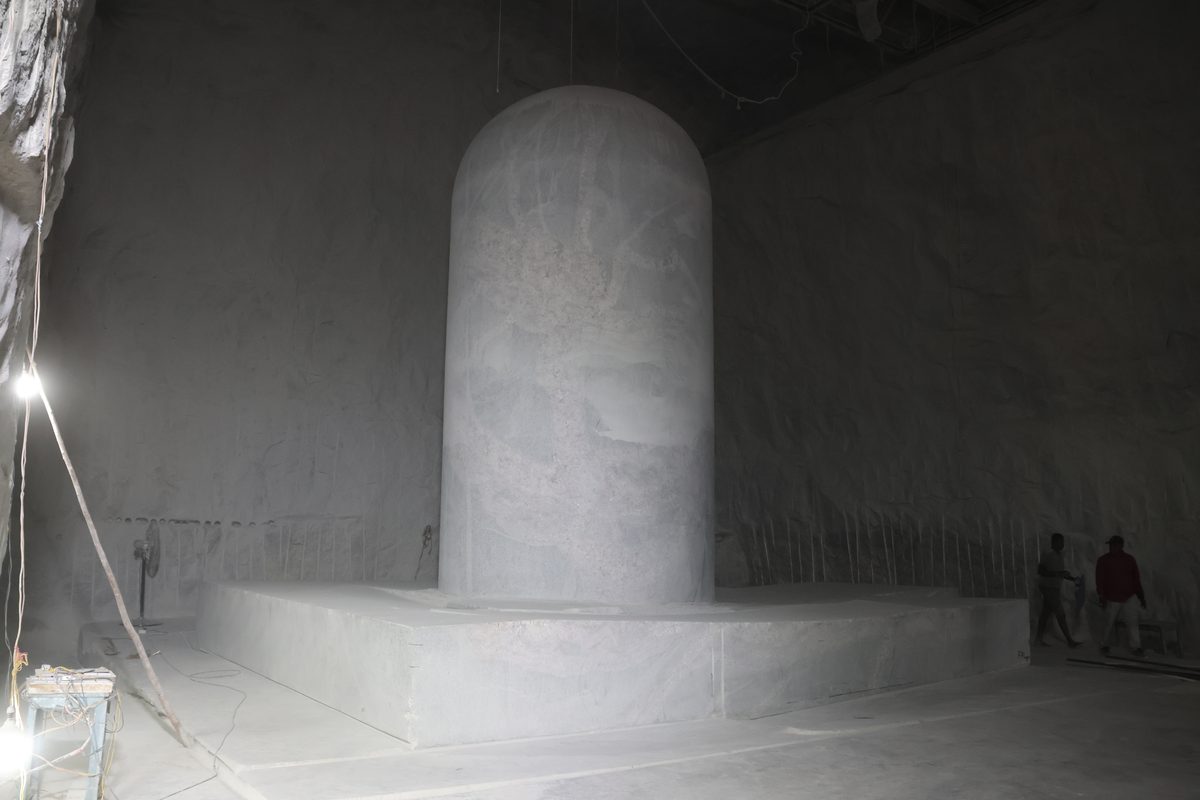
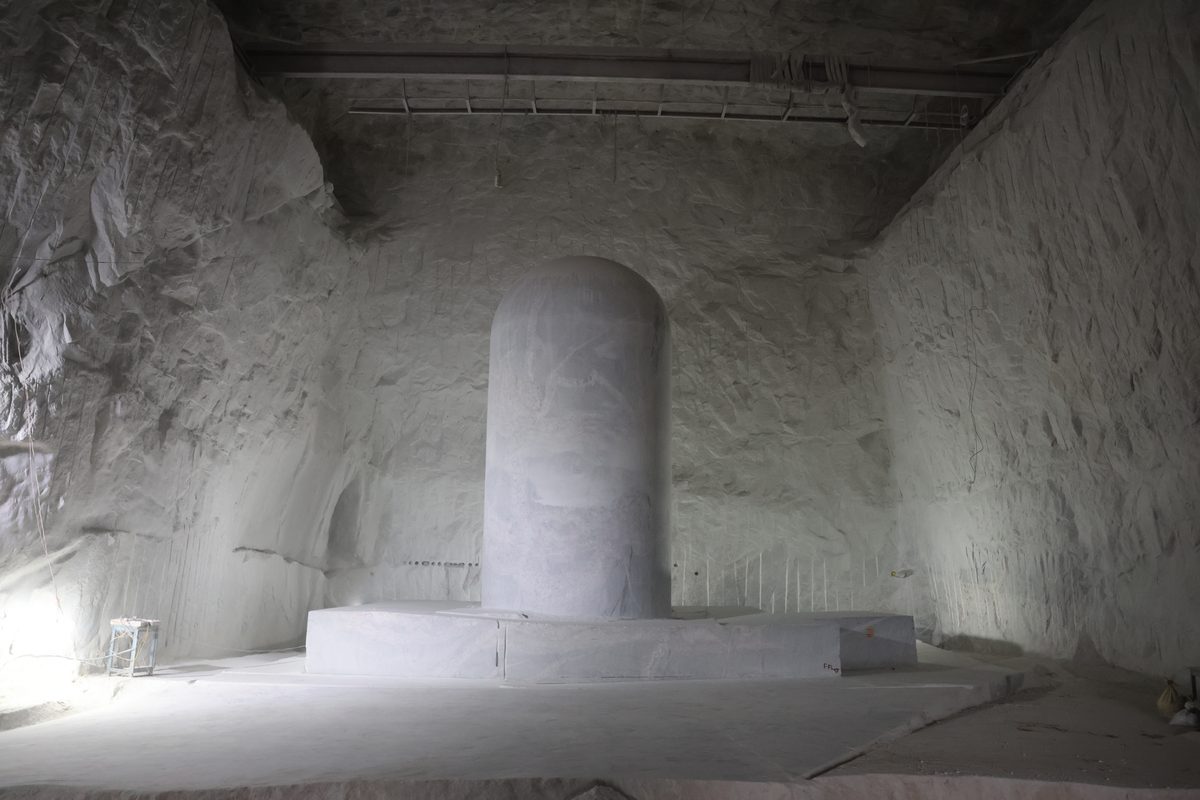
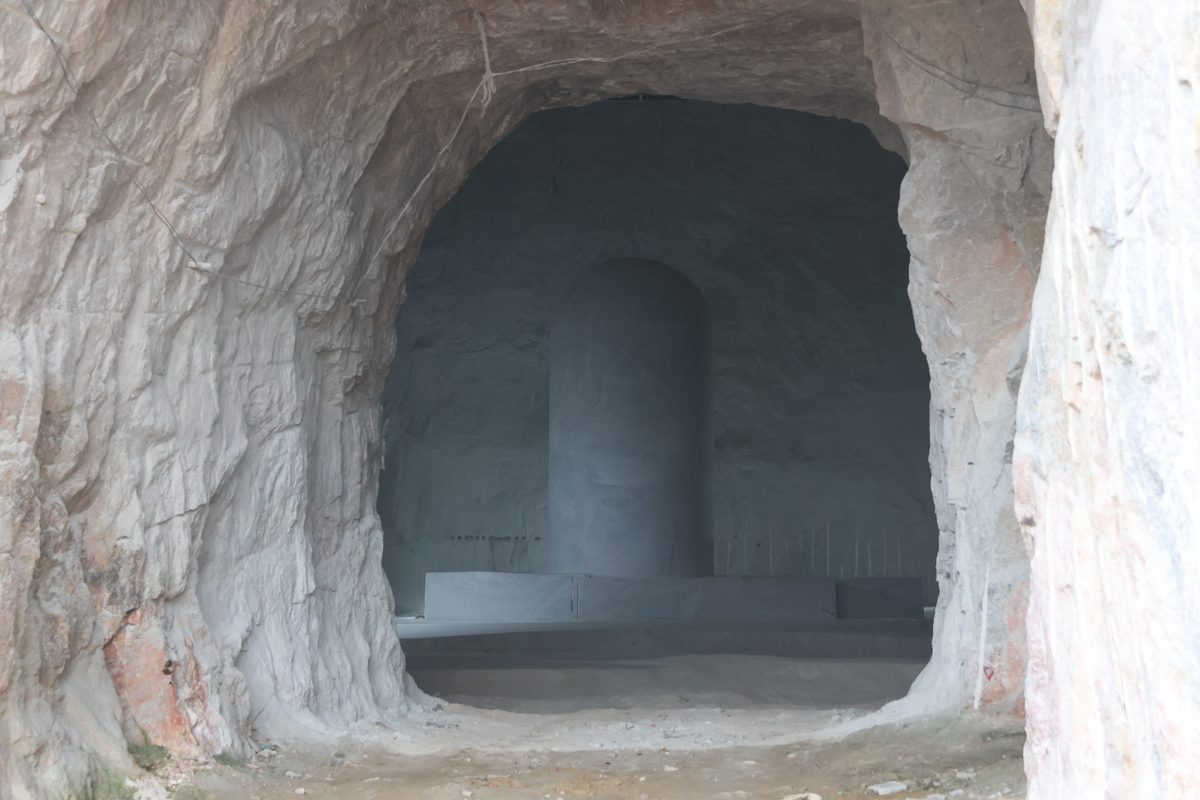
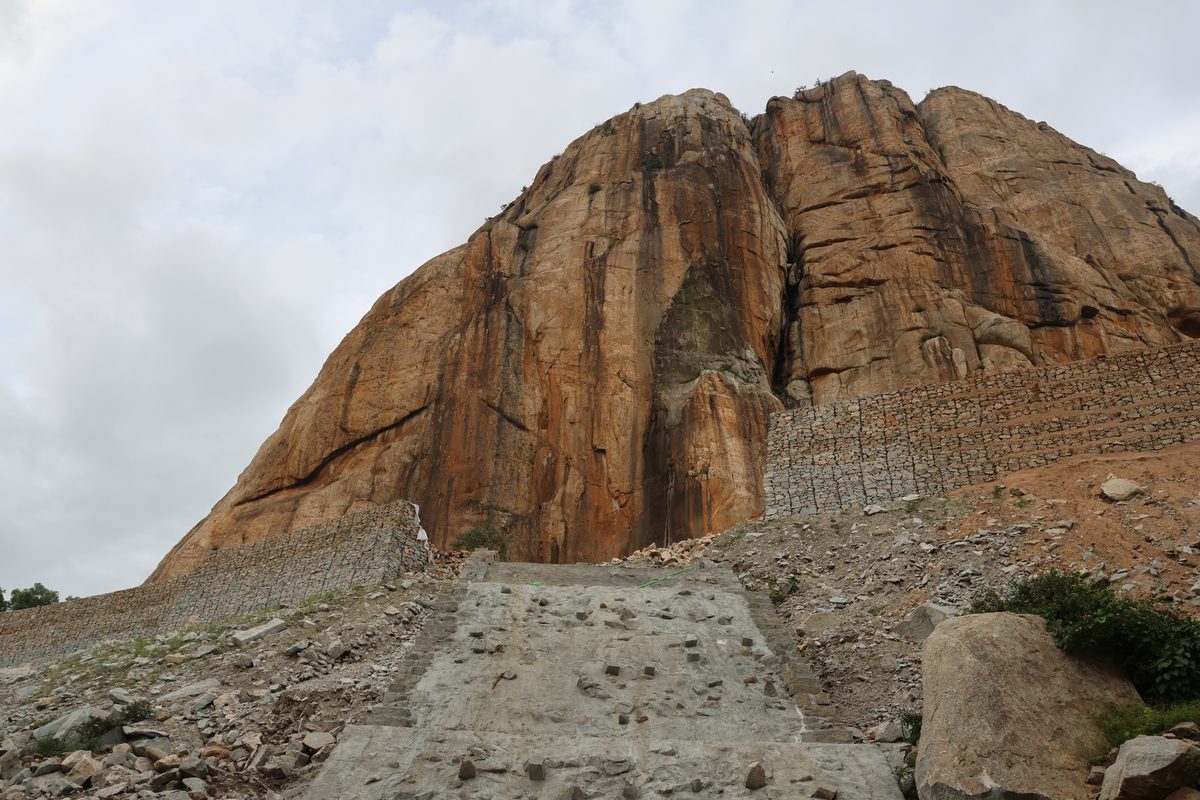
The temple complex continues to grow. Ongoing development of the temple complex is in progress in an extent of 16 acres, with the same meticulous attention to traditional methods that characterizes the entire complex.
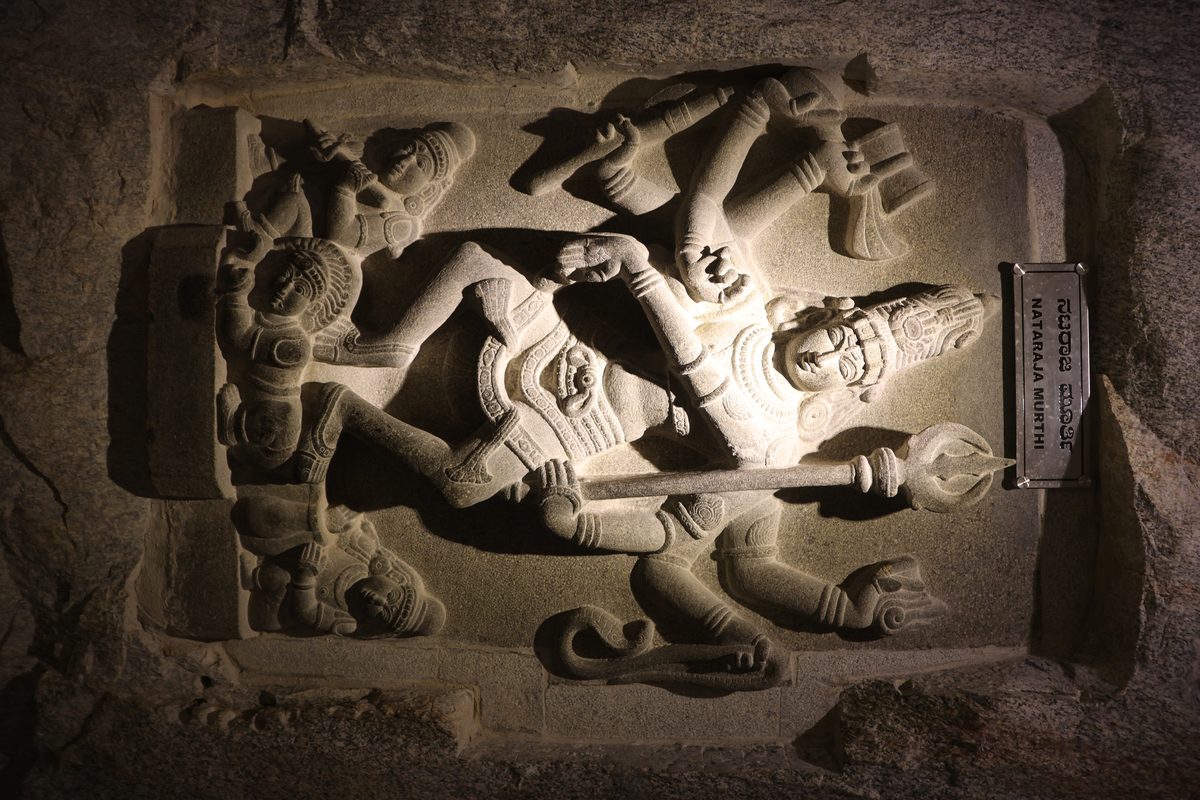
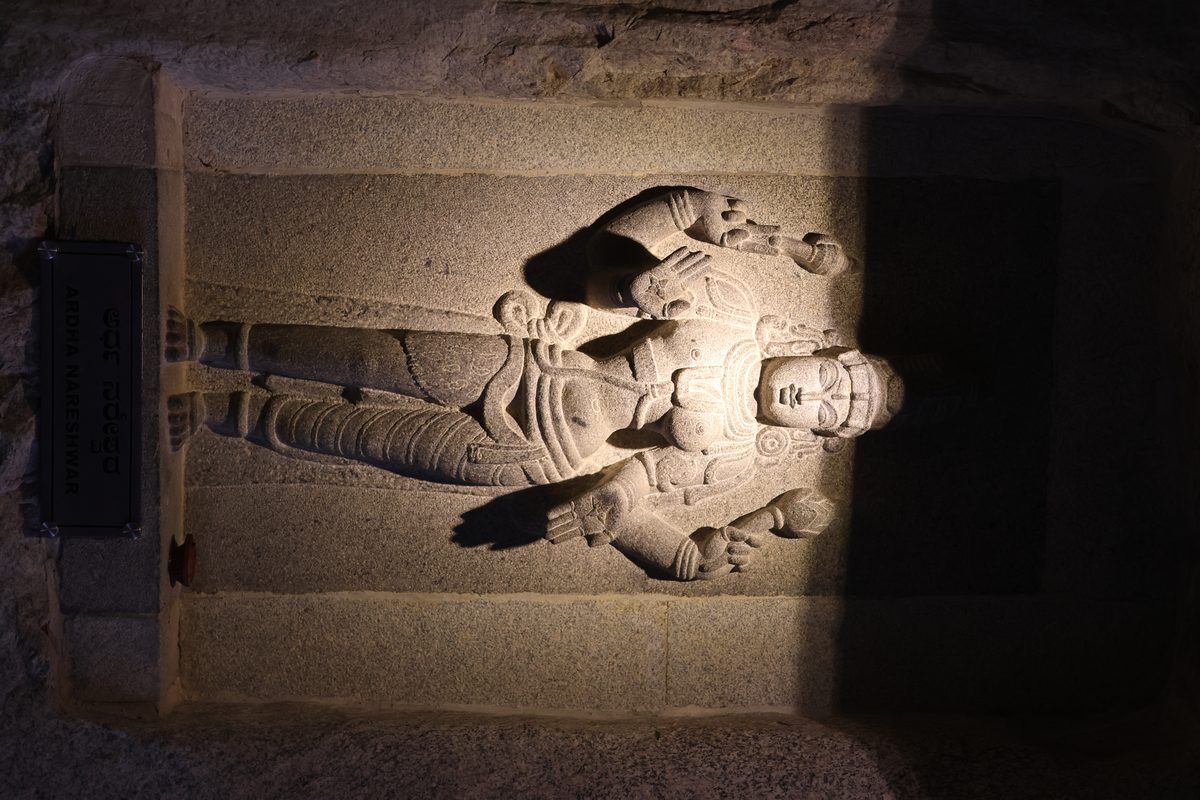
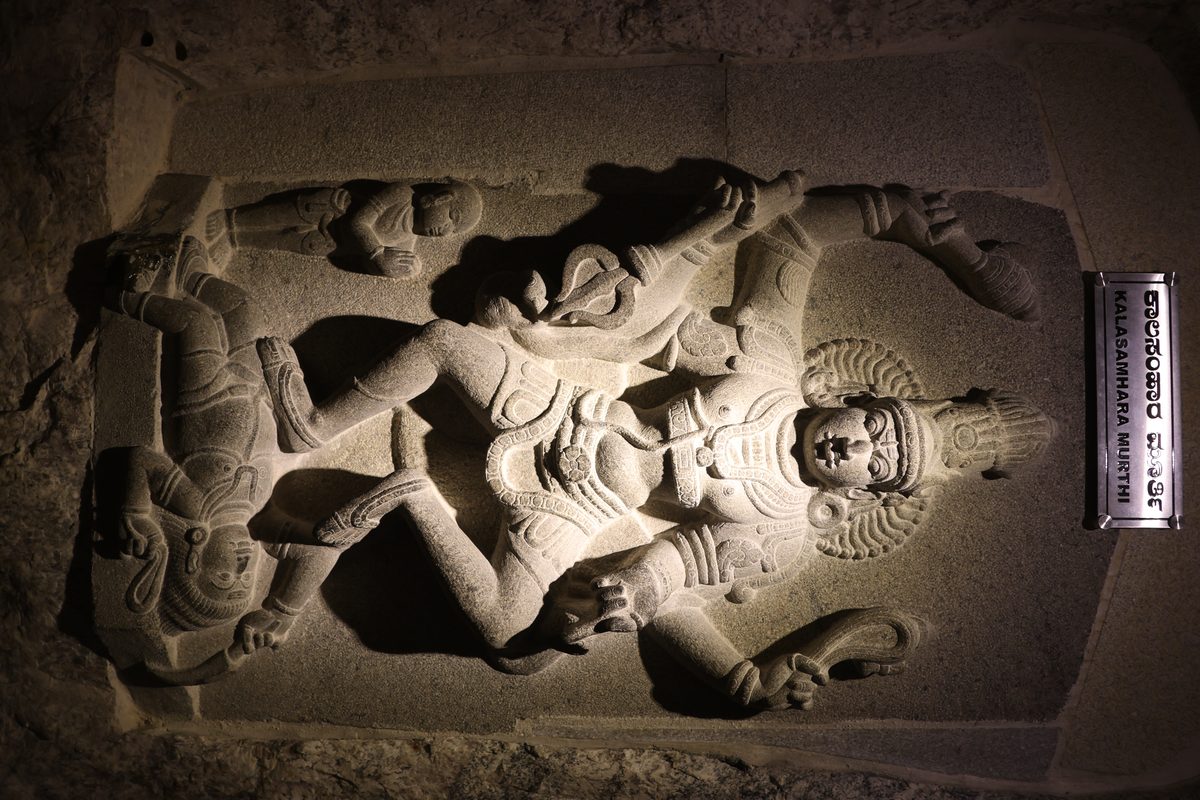
The Consecration of Swayambhu Linga and 64 aakaaras (Leela Murhty) of Lord Shiva is under progress in the new cave — adding yet another sacred dimension to the complex. Additional worship and gathering spaces are being developed to accommodate the growing numbers of devotees.
The construction work carries forward the vision of founder Sri Chowda Reddy and the artistic legacy of Late Sri S.M. Ganapathi Stapathi — ensuring that each new addition honors the same traditions and standards of craftsmanship that define Kailasagiri.
A Modern Marvel
The Largest in
1,000 Years
India's cave temple tradition stretches back over two millennia. The rock-cut temples of Ajanta (2nd century BCE to 5th century CE), Ellora (5th to 10th century CE), and Mahabalipuram (7th century CE) represent the pinnacle of this ancient art — masterworks that have inspired awe for a thousand years and more.
After the great cave temple building era ended around the 10th century, no comparable man-made cave temple complex was created for over a millennium — until Kailasagiri. This is what makes Shri Kailasagiri Guhantara Devalaya historically significant: it is the first and largest man-made interconnected cave temple complex built in the last 1,000 years.
While the ancient cave temples were carved out of existing rock formations by royal patronage with armies of artisans, Kailasagiri was built through the devotion of one man and the generosity of a community — making its achievement all the more remarkable.
The temple stands as proof that the great cave temple tradition of India is not merely a relic of the past, but a living, evolving art form capable of inspiring future generations.
Square Feet
Interconnected cave complex
Years
First cave temple of this scale in a millennium
Years of Construction
And still expanding — Kshetra Expansion in progress
Consecrated Deities
Hand-sculpted in the Chola-Pallava tradition
Ancient Mastery
The Chola-Pallava Sculptural Tradition
Late Sri S.M. Ganapathi Stapathi
The artistic vision behind every sculpture and architectural element at Kailasagiri belongs to the legendary Late Sri S.M. Ganapathi Stapathi. A master sculptor (Stapathi) from a long lineage of temple artisans, he dedicated his life to preserving and practicing the ancient Chola-Pallava sculptural tradition.
This tradition — which produced the breathtaking bronzes of the Chola dynasty and the monumental rock carvings of the Pallava dynasty — is one of the most refined sculptural systems ever developed. Every proportion, every gesture, every ornamental detail follows precise canonical texts (Shilpa Shastras) passed down through generations.
Sri Ganapathi Stapathi's appointment as chief sculptor ensured that Kailasagiri would be not merely a modern construction project, but a genuine continuation of a thousand-year artistic heritage.
Authentic Ancient Methods
What distinguishes Kailasagiri from most modern temples is the rigorous adherence to traditional sculptural methods. In an era when machine-carving and synthetic materials have become commonplace, every idol and relief at Kailasagiri was hand-carved using tools and techniques unchanged for centuries.
Sacred proportions (Tala Mana): Each deity was sculpted following the precise measurements prescribed in the Shilpa Shastras. The height-to-width ratios, the positioning of limbs, the size of facial features — every dimension follows divine mathematics.
Iconographic accuracy: The mudras (hand gestures), ayudhas (divine weapons and objects), alankaras (ornaments), and vastra (garments) of each deity were crafted in strict accordance with the canonical descriptions found in ancient texts.
Material selection: The stone and materials used in the sculptures were chosen following traditional guidelines that consider the spiritual properties of different rocks and metals.
Experience the Sacred Caves
See It With Your Own Eyes
No photograph can capture the awe of standing inside these sacred caves. Visit the gallery for more images, or plan your pilgrimage today.