About the Sacred
Cave Temple
A 20,000 sq ft spiritual marvel — the largest man-made cave temple built in the last millennium
Quick answer
Shri Kailasagiri Guhantara Devalaya (Kailasagiri Cave Temple) is a 20,000 sq ft man-made cave temple in the Ambajidurga hills at Kavalaganahalli, near Chintamani, Karnataka — about 80 km from Bangalore. Dedicated to Lord Shiva with nine consecrated deities, it is the largest man-made cave temple built in the last 1,000 years, hand-carved in the Chola-Pallava tradition by Late Sri S.M. Ganapathi Stapathi. Entry is free; darshan is 7 AM–7 PM daily.
Last updated: June 2026
The Sacred Abode
Shri
Kailasagiri
Guhantara Devalaya
Shri Kailasagiri Guhantara Devalaya — meaning "The Temple within the Caves of Kailasa Mountain" — is a breathtaking spiritual complex nestled in the ancient Ambajidurga Hill Range of Karnataka. It stands as the largest man-made interconnected cave temple complex created anywhere in the world in the last 1,000 years.
Spanning over 20,000 square feet, this sacred complex is not merely a temple — it is a living, breathing testament to the power of unwavering devotion, the mastery of ancient sculptural traditions, and the timeless spirit of Shaivism that has illuminated the Indian subcontinent for millennia.
Unlike modern temples built with contemporary methods, Kailasagiri was sculpted using authentic ancient techniques — every idol, every pillar, every relief carved in the revered Chola-Pallava tradition by master sculptors, preserving an art form that has endured for over a thousand years.
The temple complex features multiple interconnected caves, grand halls, meditation chambers, and sacred shrines — all harmoniously woven into the rocky hillside to create an atmosphere of profound spiritual immersion.
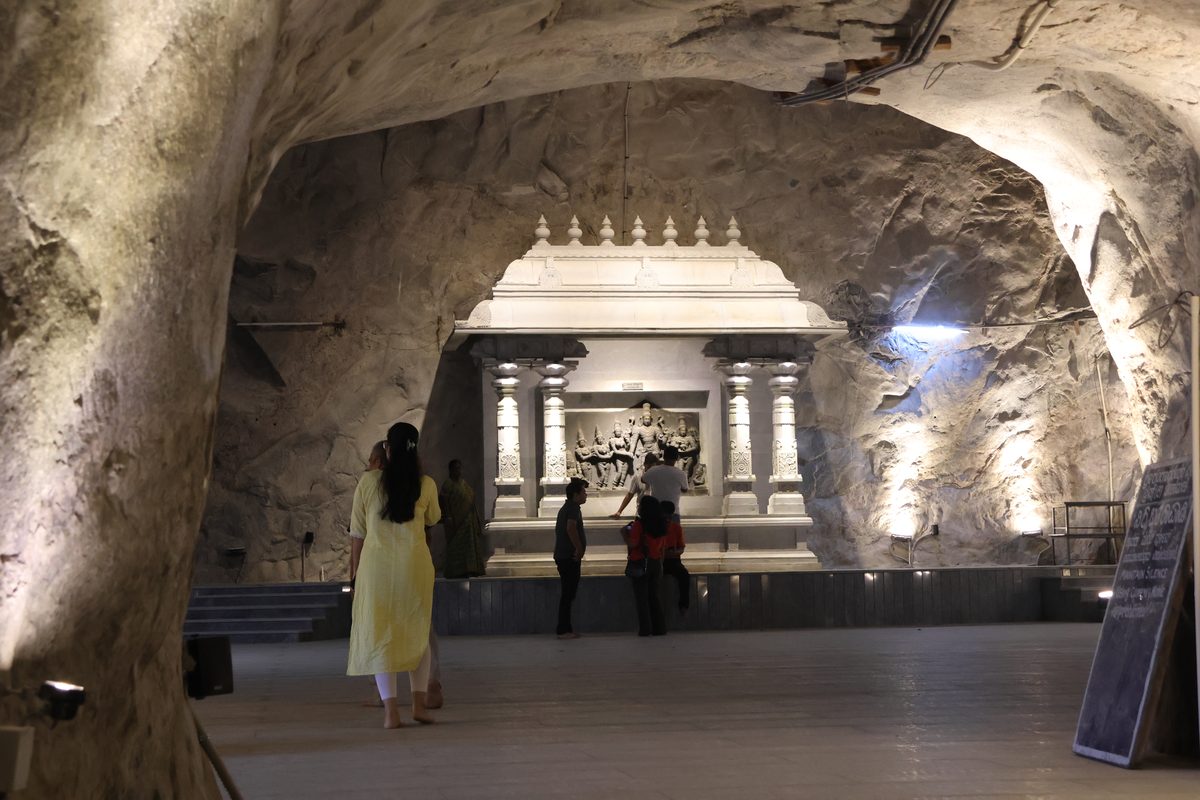
The interconnected cave chambers of Kailasagiri Guhantara Devalaya
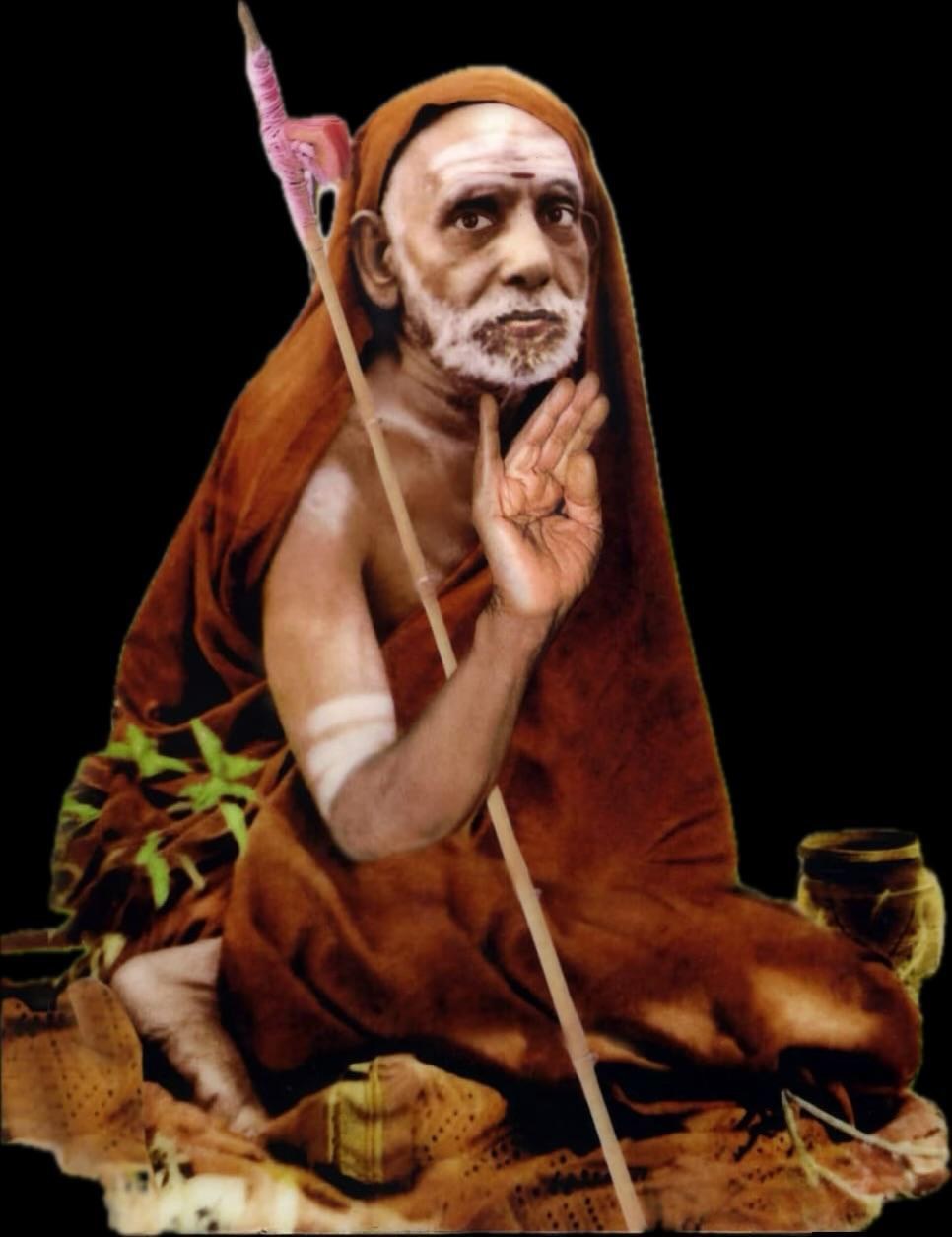
Sri Sri Chandrashekarendra Saraswathi Maha Swamy
Paramacharya's Vision for Eternity of Hinduism
The Walking God
These man made caves are part of the Ambajidurga Hill Range situated in Chintamani Town. In 1960 the famed Bhadrachalam Sitaramachandra Swamy temple was reconstructed by Sri SM Ganapathi Stapathi under the guidance of his holiness 68th pontiff of Sri Kanchi Kamakoti Peetam Sri Sri Chandrashekarendra Saraswathi Maha Swamy.
During the long association Swamiji expressed his desire to Sri SM Ganapathi Stapathi to construct a cave temple of Lord Shiva which can withstand large magnitude of natural calamities.
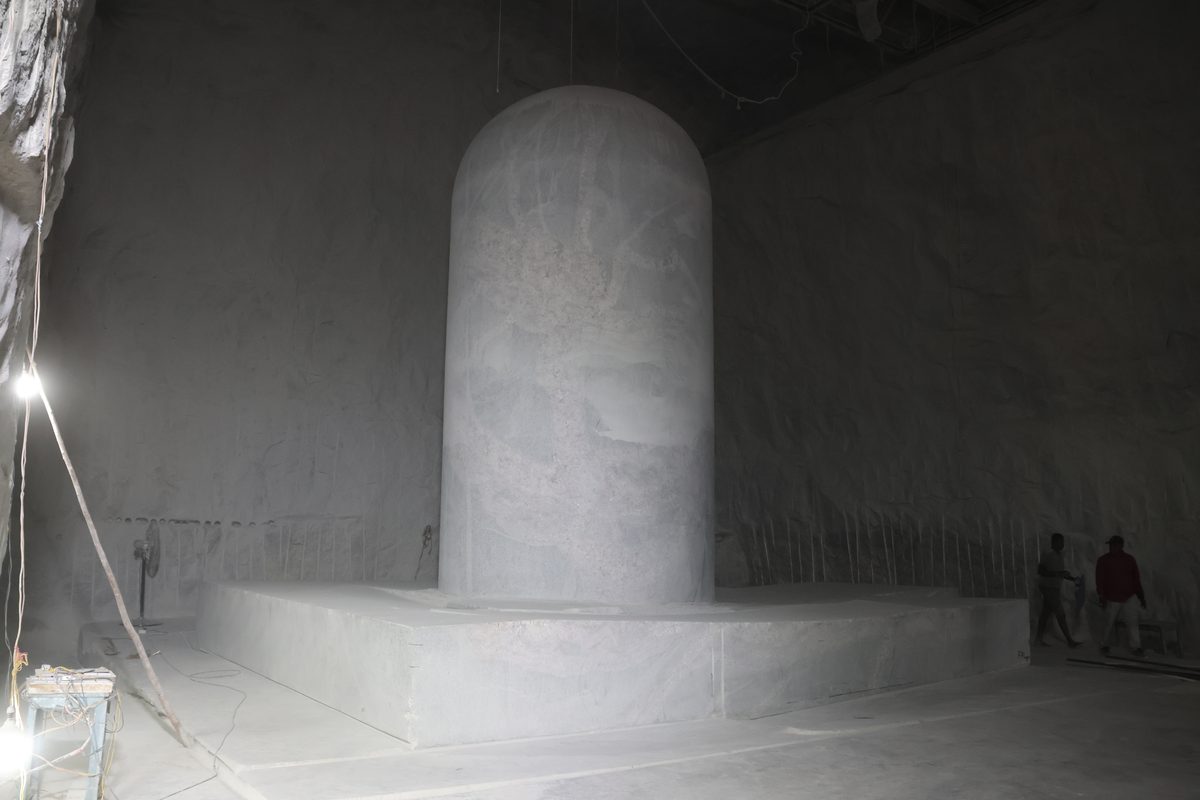
The temple complex taking shape through decades of devoted construction
The Divine Calling
The Vision
of
Sri Chowda Reddy
The extraordinary story of Kailasagiri begins in 1991, during one of the most severe droughts to strike the region. As the land and its people suffered, a humble devotee named Sri Chowda Reddy received what he describes as a divine calling — an inner awakening that compelled him to create a sacred space dedicated to Lord Shiva.
Where others saw only barren, rocky hillsides, Sri Chowda Reddy envisioned magnificent caves echoing with sacred chants. In 1993, with nothing but faith in his heart and the blessings of the divine, he began with a small, humble shelter at Kavalaganahalli, near the ancient Ambajidurga hills.
What started as a modest act of devotion grew into one of the most ambitious temple projects of modern India. By 1994, the Sri Gangadhareshwara Seva Trust was formally established, and the vision expanded from a simple shelter into a vast interconnected cave temple complex — a modern-day Kailasa on Earth.
Sri Chowda Reddy's unwavering determination, spanning over three decades, has transformed that first humble shelter into a 20,000 sq ft spiritual marvel that draws thousands of devotees from across the country.
The Master Craftsman
Late Sri S.M. Ganapathi Stapathi
The artistic soul of Kailasagiri owes its magnificence to the legendary Late Sri S.M. Ganapathi Stapathi — a renowned sculptor who carried forward the ancient Chola-Pallava sculptural tradition that has defined South Indian temple art for over a thousand years.
Appointed as the chief sculptor and architect of the entire cave temple complex, Sri Ganapathi Stapathi brought an unmatched mastery of form, proportion, and sacred geometry to every aspect of the temple. His hands breathed life into stone — each deity, each ornamental pillar, each intricate relief panel was crafted using the same authentic ancient methods that produced the masterworks of Thanjavur, Mahabalipuram, and Kanchipuram.
What makes Kailasagiri truly extraordinary is that in an age of machine-made temples and modern shortcuts, every sculpture here was hand-carved following the strict canonical texts (Shilpa Shastras) of Hindu temple art. The proportions of each deity, the mudras of each hand, the expressions on each divine face — all follow the sacred measurements prescribed by tradition.
The passing of Sri Ganapathi Stapathi was a profound loss, but his legacy lives on in every stone of Kailasagiri — a monument not only to divine worship but to the imperishable tradition of Indian sculptural artistry.
The Sacred Complex
Temple Layout & Halls
A vast interconnected system of man-made caves, halls, and shrines carved into the sacred hillside
Main Hall
The grand main hall seats 400 devotees and serves as the primary gathering space for festivals, religious discourses, and community events. Its soaring ceilings and carved pillars create a cathedral-like atmosphere within the cave.
Yaga Shalla
A dedicated hall for sacred fire rituals (homams and yagas). This specially designed space allows for the elaborate Vedic fire ceremonies that form a vital part of Hindu worship traditions.
Three Shrine Caves
The innermost sanctums house the principal deities — Chaturmukha Lingeshwara Swamy, Vallabha Ganapathi, and Goddess Jagadambe — in separate sacred cave shrines.
Meditation Hall
A serene, dimly lit cave chamber dedicated to silent contemplation and meditation. The natural acoustics of the cave create a profoundly peaceful atmosphere for inner reflection.
Anna Danam Hall
Since 2001, the temple has served free meals to all visitors daily from 12 PM to 3 PM, feeding over 400 devotees each day — a sacred tradition that has continued unbroken for over 25 years.
Kshetra Expansion
Ongoing development of the temple complex in an extent of 16 acres, expanding the already vast complex further. The Swayambhu Linga consecration is among the planned additions to the sacred complex.
Divine Presences
Sacred Deities of Kailasagiri
Nine magnificent deities reside within these sacred caves, each sculpted with profound devotion in the authentic Chola-Pallava tradition by master sculptors.
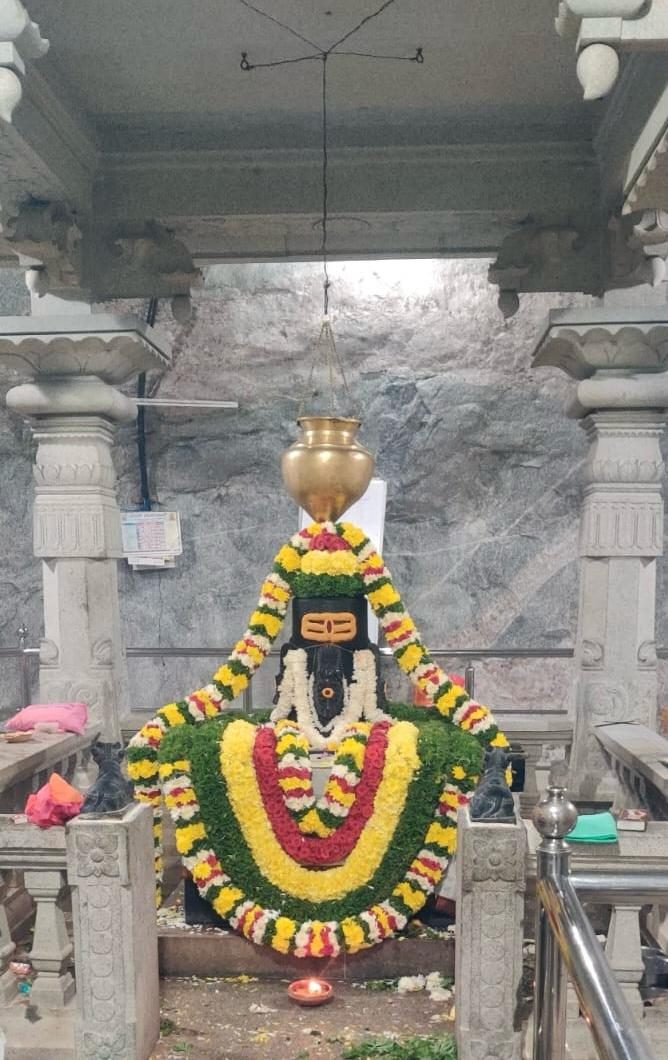
Chaturmukha Lingeshwara
Main Deity
The four-faced Shiva Linga — the presiding deity of the entire complex, representing Lord Shiva in His cosmic form facing all four cardinal directions.
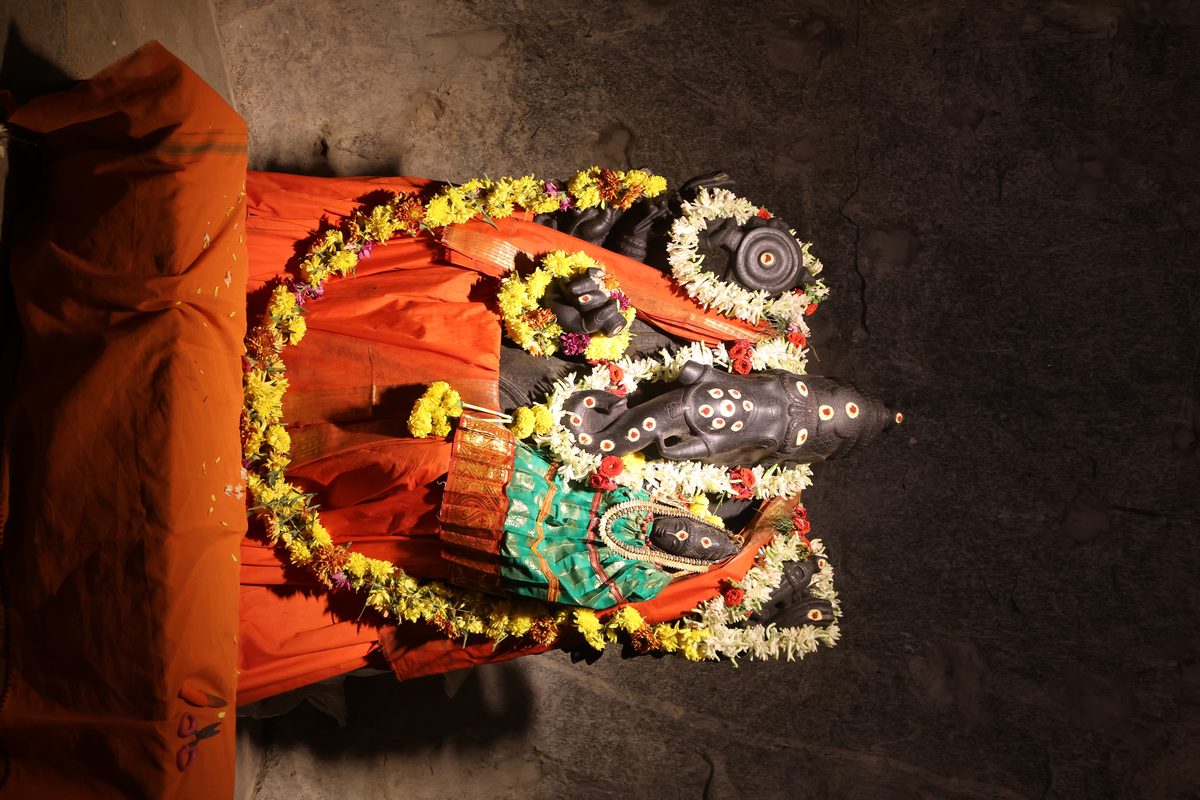
Vallabha Ganapathi
Lord of Beginnings
The beloved elephant-headed deity, the first to be consecrated at Kailasagiri in 1994, removing obstacles and blessing new beginnings.
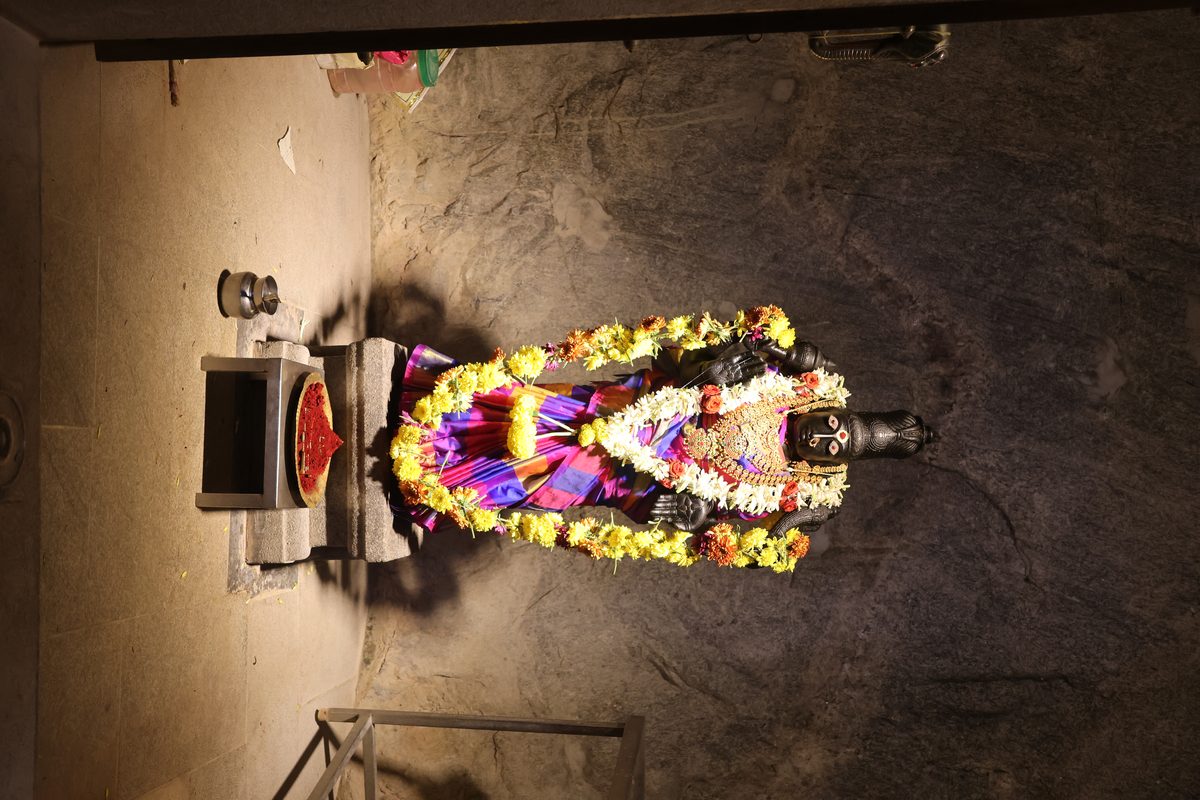
Jagadambe
Mother Goddess
The divine Mother of the Universe, consecrated alongside the main deity in 1996, radiating grace, protection, and maternal love.
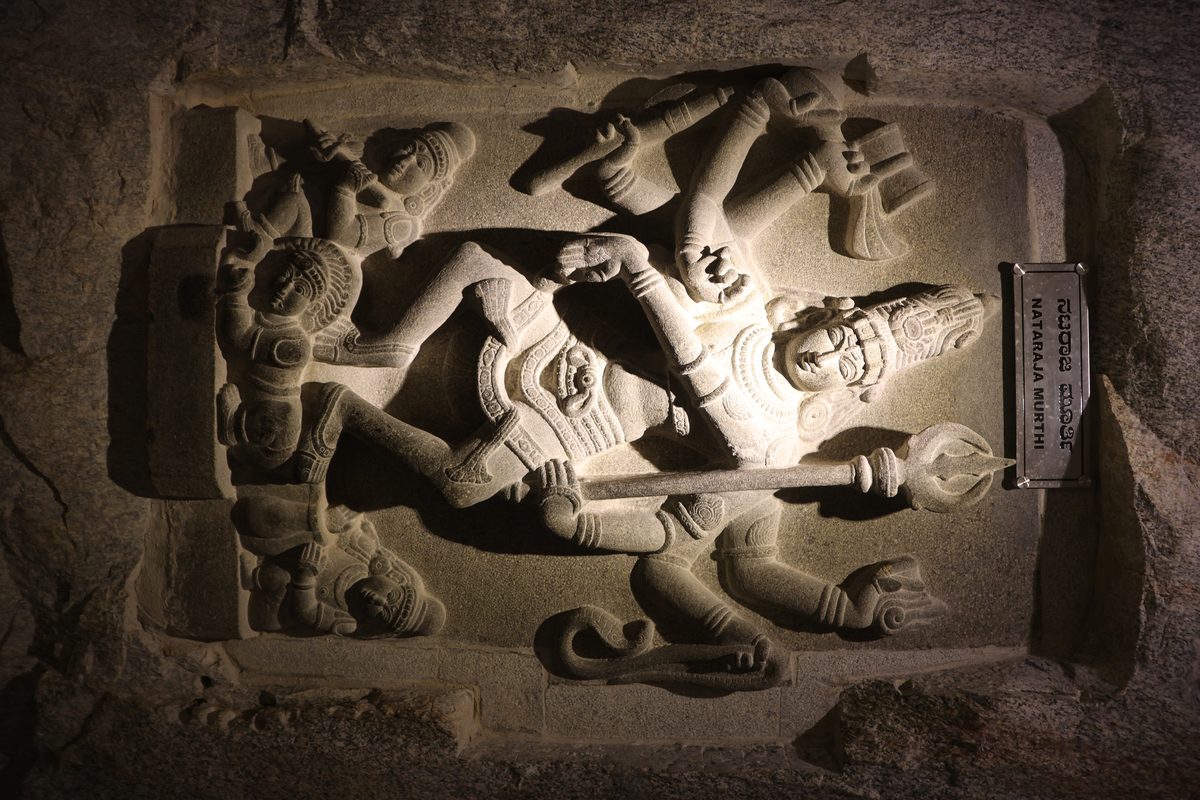
Nataraja
Cosmic Dancer
Lord Shiva in His iconic dancing form, performing the Tandava — the cosmic dance of creation, preservation, and dissolution.
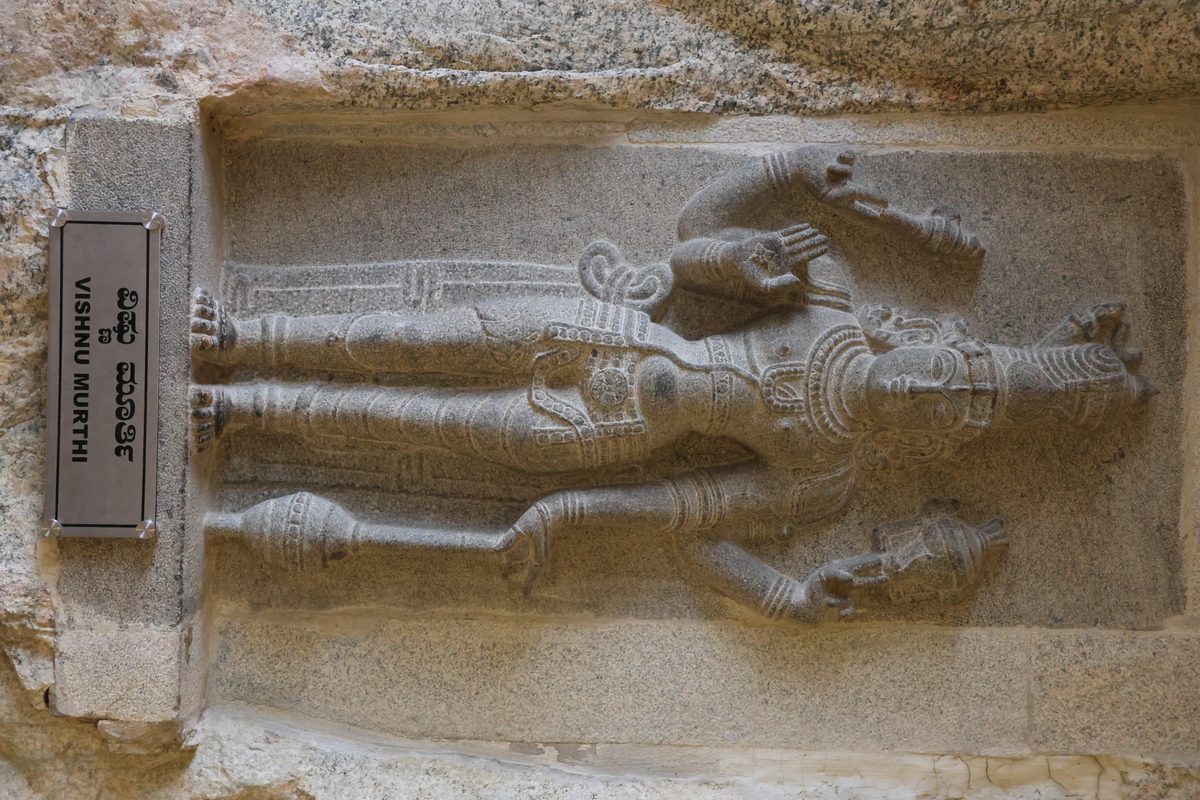
Vishnu
The Preserver
Lord Vishnu, the sustainer of the universe, representing the harmonious co-existence of Shaiva and Vaishnava traditions within one sacred space.
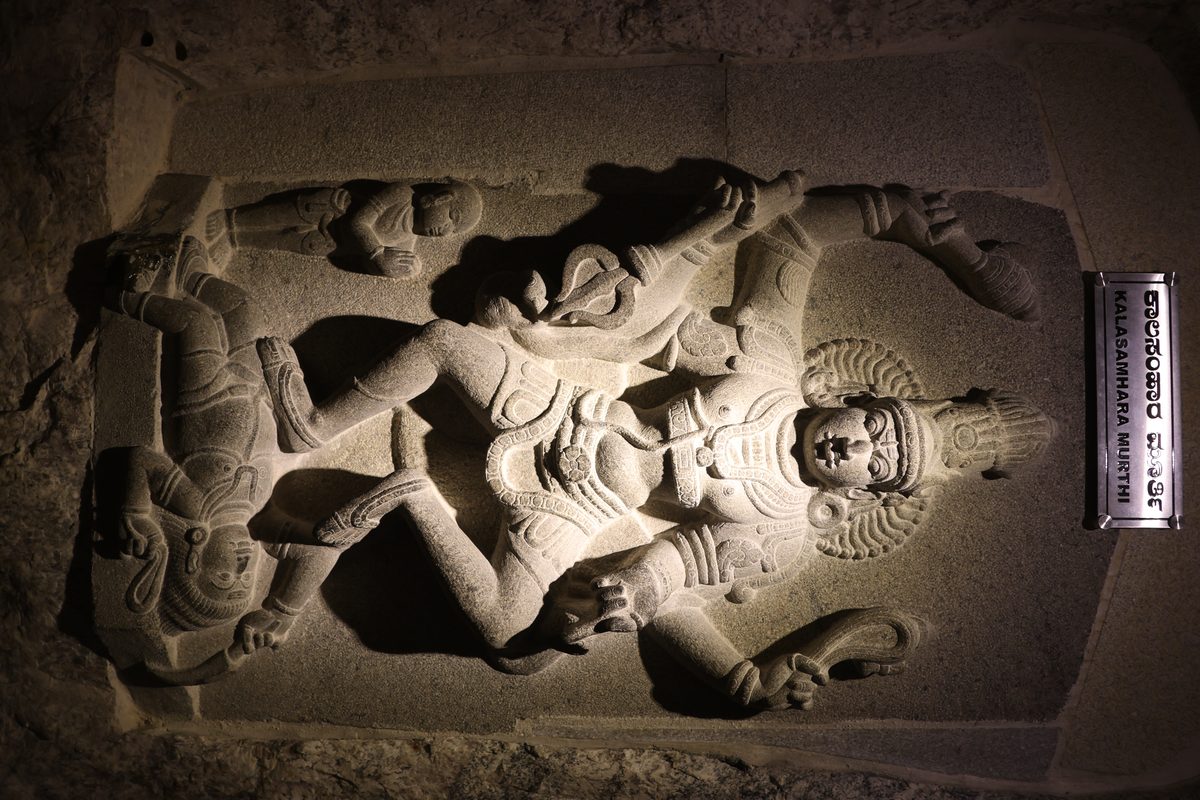
KalaSamhara
Destroyer of Time
Shiva in His fierce form as the conqueror of death itself — the deity who vanquished Yama to protect His devotee Markandeya.
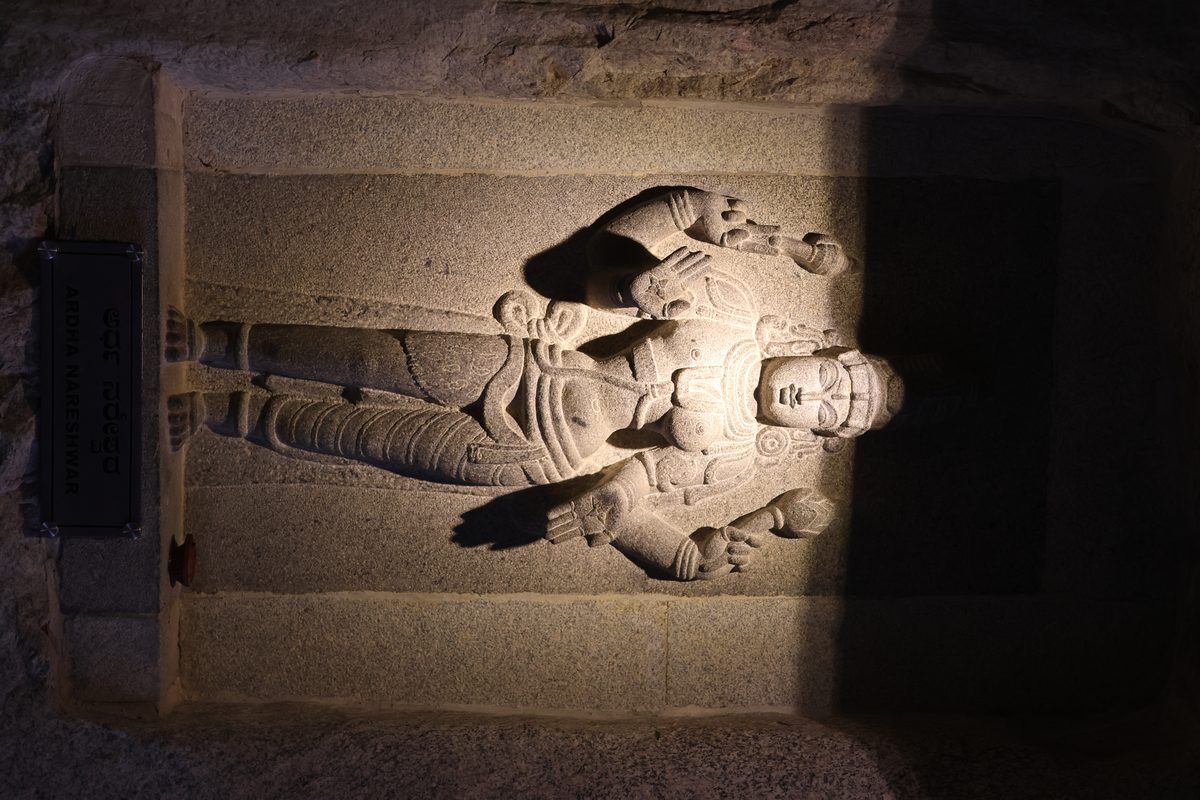
Ardha Nareeshwara
Divine Union
The sacred half-male, half-female form symbolizing the inseparable union of Shiva and Parvati — the balance of masculine and feminine cosmic energies.
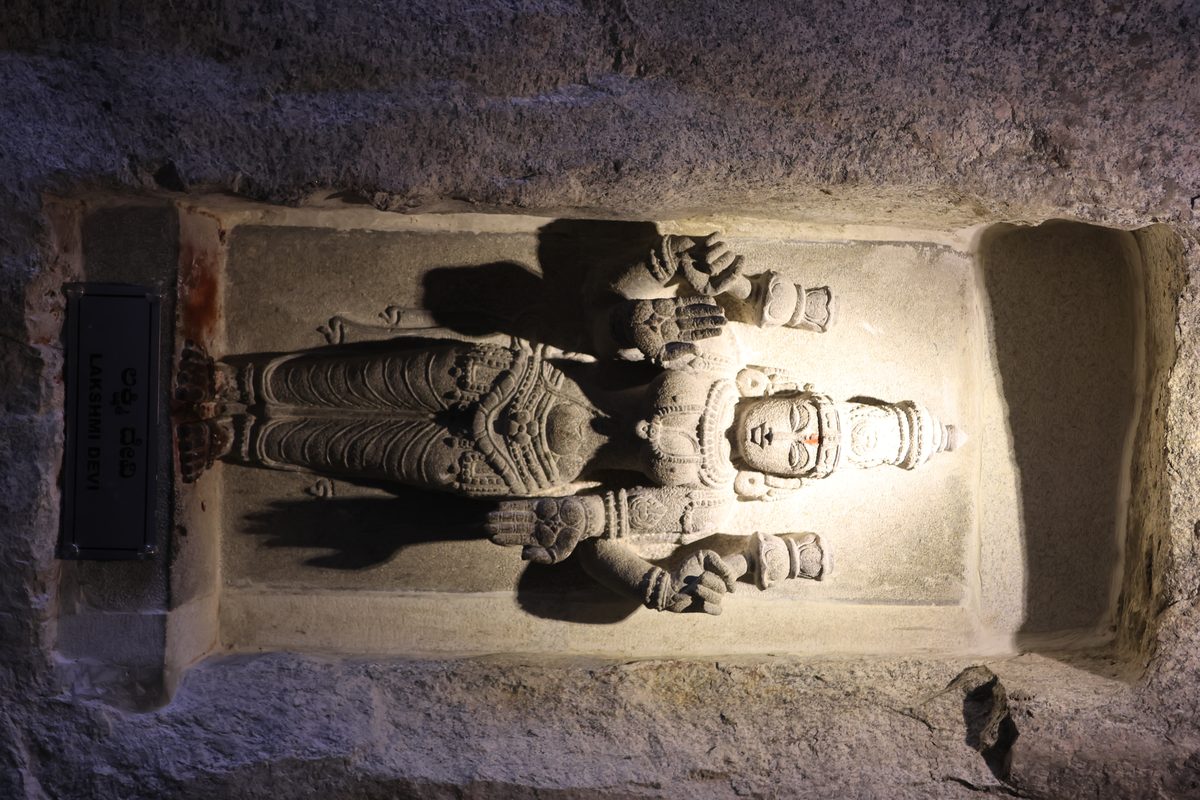
Lakshmi
Goddess of Prosperity
The radiant goddess who bestows wealth, fortune, and abundance upon devotees — both material prosperity and spiritual richness.
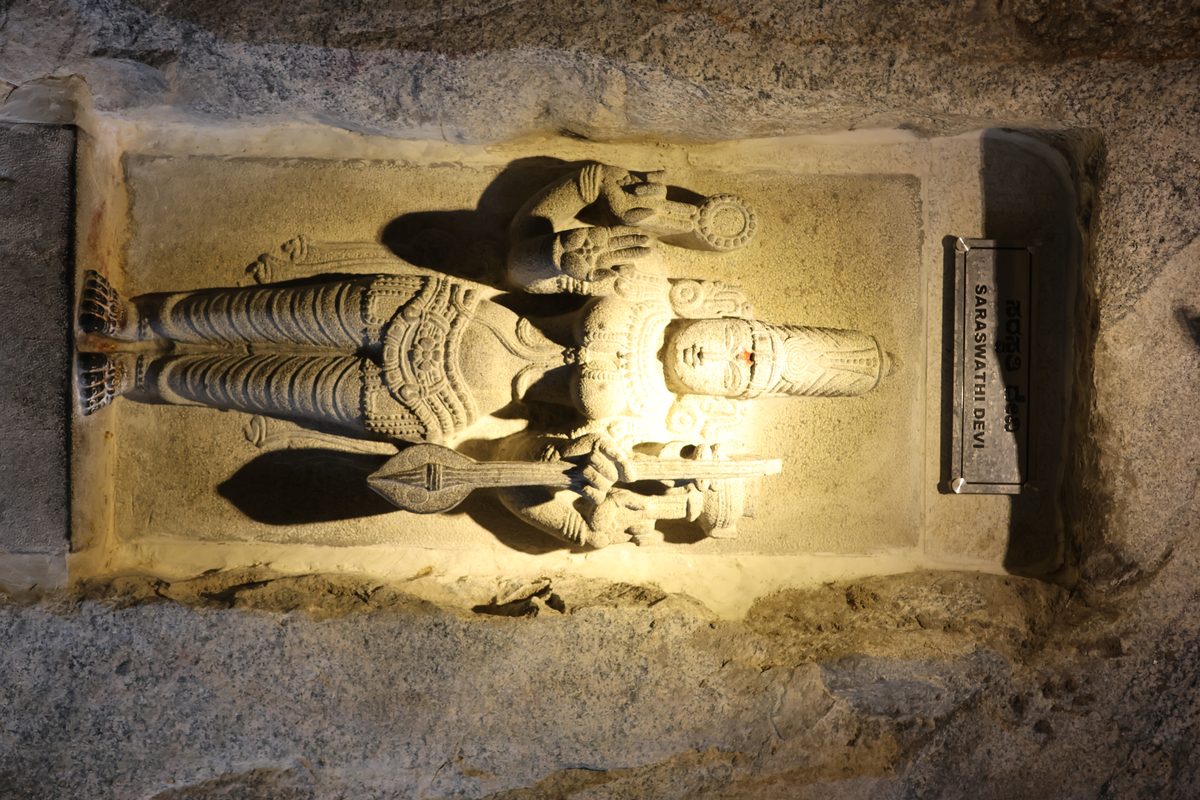
Saraswathi
Goddess of Knowledge
The goddess of learning, wisdom, music, and the arts — worshipped by students and seekers of knowledge from across the region.
Swayambhu Linga
Consecration in Progress
A self-manifested Shiva Linga — the consecration is under progress in the new cave as part of the temple's ongoing Kshetra Expansion.
Sacred Heritage
Spiritual Significance
Kailasagiri is, at its heart, a temple of Lord Shiva — the supreme deity of transformation, destruction, and regeneration. The entire complex is conceived as an earthly echo of Mount Kailasa, the mythical abode of Lord Shiva in the Himalayas. Within these caves, devotees experience the same sense of divine proximity that sages and saints have sought in mountain caves for millennia.
By choosing this sacred site, Sri Chowda Reddy's vision brought together the ancient spiritual energy of the land with the timeless power of Shiva worship — creating a new pilgrimage destination rooted in millennia of sacred tradition.
The four-faced Chaturmukha Lingeshwara Swamy — the spiritual heart of Kailasagiri
Continue Your Journey
Explore the Sacred Legacy
Discover the rich history of Kailasagiri, or plan your pilgrimage to this extraordinary cave temple complex.